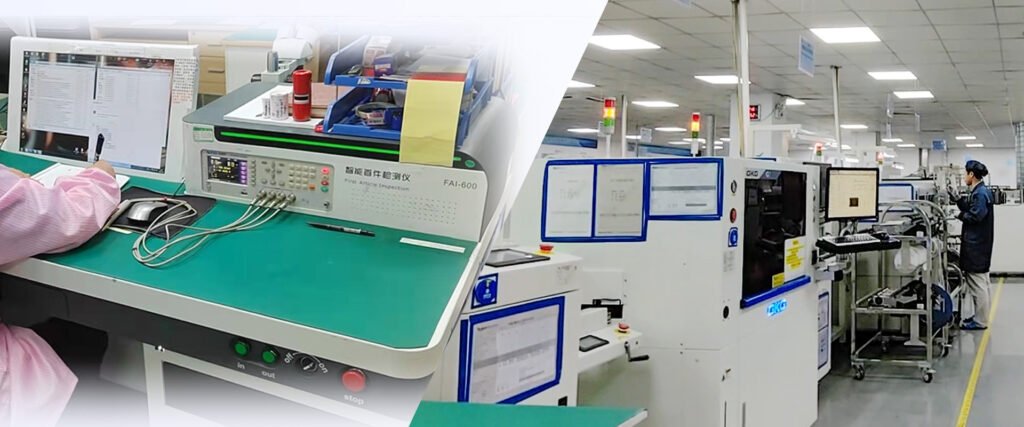
These PCBA project examples show how MG PCBA supports customers from prototype verification through component sourcing, assembly, inspection, testing and repeat production. The projects cover different product types, board complexities, quantities and quality requirements.
To protect customer confidentiality, company names, product designs, BOM details, firmware and other sensitive information are not disclosed. The examples summarize actual project types and manufacturing processes, while the specific production scope and test requirements vary for each customer.
Case Study 1: Industrial Control PCBA with Programming and Functional Testing
Project Requirements
An overseas customer required a medium-volume batch of assembled control boards with customer-supplied firmware, serialized identification and functional verification before shipment. The project required component sourcing, PCBA assembly, programming, testing and production records, with the first units verified before the remaining batch proceeded.
Manufacturing Approach
The team reviewed the BOM, production files, firmware version and test instructions before assembly. An initial group of boards was programmed and tested for customer confirmation. After approval, production continued in stages, with QR identification, programming status and test results checked before packing.
Project Outcome
Approved boards completed the required programming and functional verification process before shipment to the customer’s designated destinations. The staged verification process helped maintain consistency between firmware, board identification and production records throughout the order.
Case Study 2: PCBA Prototype with Enclosure Fit Verification
Project Requirements
A customer required a small set of functional prototypes combining newly manufactured PCB assemblies with a customized enclosure and control panel. In addition to electrical operation, the fit between the PCBA, housing and buttons needed to provide acceptable alignment, assembly clearance and operating feel.
Manufacturing Approach
The PCB assemblies were prepared while the enclosure structure was reviewed and adjusted through several physical prototype rounds. The engineering team checked the board position, button contact, panel structure and assembly method, then coordinated further enclosure modifications when the initial fit and button response were not satisfactory.
Project Outcome
After repeated fit verification and structural adjustment, the prototype configuration passed the internal assembly check. Five sample sets were prepared and shipped for customer evaluation, providing a confirmed mechanical and electrical direction for the next production decision.
Case Study 3: LED Electronic Assembly with Customer-Supplied Materials
Project Requirements
A lighting customer required two production batches using customer-supplied LED material. The assemblies had different finished lengths and quantities, so material usage, cutting dimensions, production identification and packing needed to be controlled separately for each configuration.
Manufacturing Approach
Incoming customer-supplied materials were checked against the available project information before production. The two assembly configurations were separated by work order, with the required dimensions and quantities confirmed before cutting and assembly. Visual inspection, polarity checks and production identification were performed during the process.
Project Outcome
Both production configurations were completed, packed separately and delivered to the customer. Separating the work orders and material records helped maintain the correct dimensions, quantities and identification for each batch.
What These PCBA Project Examples Show
These PCBA project examples show the importance of early file review, staged verification, material control and clear acceptance criteria. For prototypes, small batches and repeat production, MG PCBA reviews the available manufacturing information before production and coordinates component sourcing, assembly, inspection, programming and testing as required. The actual manufacturing process and documentation scope are confirmed according to each project’s technical and quality requirements.
Discuss Your PCBA Project
Every PCBA project has different requirements for component sourcing, assembly, programming, inspection, testing, traceability and final product integration. Providing complete production files and clear acceptance criteria helps the engineering and manufacturing teams evaluate the project more accurately.
Submit your Gerber files, BOM, assembly drawings, firmware and test requirements through our Request a PCBA Quote page. MG PCBA will review the available information and confirm the suitable production and verification process for your project.